Tuesday, March 15, 2011
Japan
We have present and past Japanese students. Their contribution to the culture of our school is priceless. Our hearts and thoughts go out to them and their families during this dreadful time in Japan.

Monday, March 14, 2011
Happy birthday

Mrs. D., our founder, celebrated her 90th birthday this past weekend. Dozens and dozens of former students and parents of former students converged upon the school to greet her. She was surprised and delighted to be so honored. Over the years she has touched the lives of well over a thousand children and their parents. She still enjoys being in the school to see the children's work and listen to them read.
Thursday, February 17, 2011
A Fraction Game

 I use this game to introduce fractions to kindergarten age children and higher. Through it, they learn that when the denominator number is smaller, the fraction piece is larger. It also helps them to visualize how fractions can be added together.
 Our fraction circles range from 1 whole to a circle of ten tenths. For the game, I made up 3/4 by 3/4 inch squares with all of the fractions printed on them. There is one "1" and two "1/2" squares, three "1/3" squares, etc. To begin the game, the children place each of the fraction labels on the corresponding red fraction piece.
I cut label stickers to fit each side of two dice. On the sides I wrote fractions up to 1/10, since that is how far our fraction circles go. Each player (usually two) takes the base circle from the whole and the half fraction pieces. A child can play alone or with a friend. the object of the game is to see who can fill up their base circle first. The circle must be filled up exactly. Sometimes no one wins. They are eager to play again until there is a winner.
I begin by explaining that one half is one of two parts, one third is one of three parts, etc.
A player rolls the two dice, however, he can only use one of the fractions shown. He must choose the one that will best fill his circle. If neither fraction shown will fit into what remains of his circle, he must try again on the next turn. Although there often is no winner, this is a popular game.
Saturday, January 29, 2011
Happy Chinese New Year!

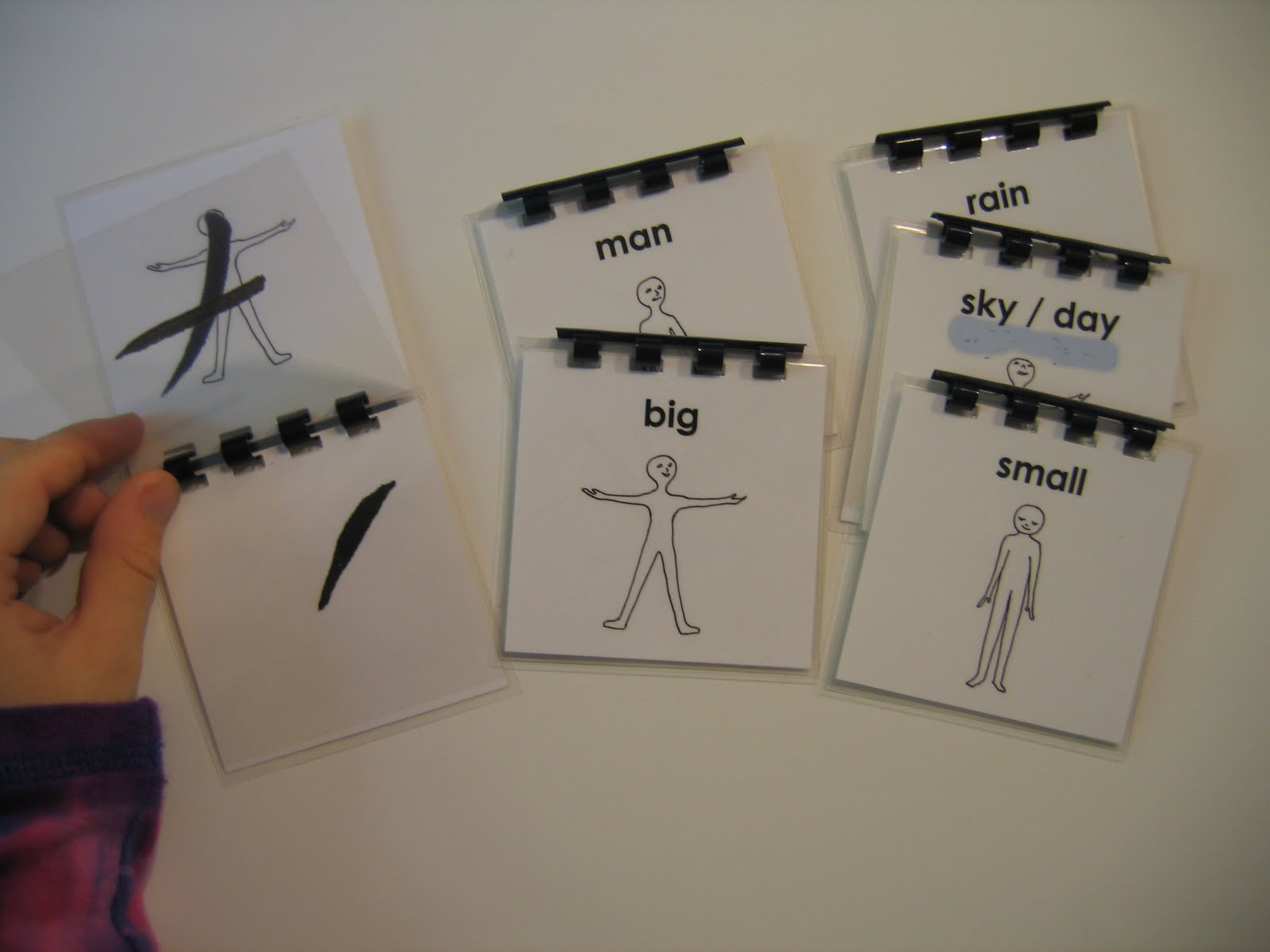 Practicing making Chinese characters with these little overlay booklets. Each one shows the strokes for making a single Chinese character for a word. The pages are transparent to show how to build the character. Since each character fits into a square, plain paper divided into squares is used for practice. We use individual small squares of paper.
Wednesday, January 26, 2011
Tiger Moms
I'm sure you've heard the growl about "Tiger Mom" parenting. For the last 30 years, our school has attracted Asian families. Typically, these parents do expect excellence from their children. The children that I've known are well loved by both parents. Recognizing the potential and ability of each child to learn is part of the expression of that love. This was also part of Dr. Montessori's philosophy. She expected more of the children in her charge than any other educator of her day. And just as Dr. Montessori provided the children with materials and experiences to meet her expectations, Asian parents often use their free time to instruct and monitor their children.
While many of these children may spend their free time at home doing math problems at the kitchen table or diligently practicing an instrument, they are proud of their achievements. As a teacher, it is a joy to work with them. They are eager and not afraid to learn new materials and processes. They show respect for their teacher and other adults. Yet, these same children, appropriately and happily have fun, laugh and enjoy friends in school throughout the year.
Amy Chua's "Tiger Mom" is a bit extreme. However, the message that when you expect more you get more and that the child will benefit from the experience with self confidence that could not have been achieved any other way, is true.
Tuesday, January 18, 2011
To encourage or not ...

We find that many children need a bit of nudging, in reading as well as math. These are important areas and areas where the children themselves are happy to make strides. I imagine that is because their parents value progress in those areas. In this way, we still "follow the child" while helping those who need it, to make the right choices.
Thursday, December 16, 2010
painting

Some children have such a smooth flow of activities throughout the day. After performing several tasks requiring thought in math and practicing new skills in writing, she quietly put on the apron and began painting. An educationally productive break in the Montessori style, where just changing activities rests the mind.
Subscribe to:
Posts (Atom)
